Make fine detail usable
Clean engraving, controlled scoring, and accurate placement help teams deliver professional output from compact workspaces.
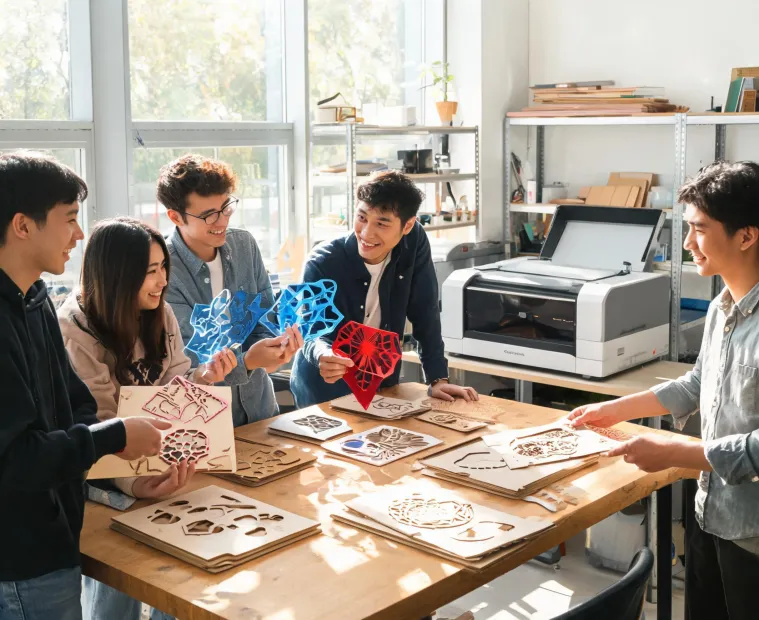
Glowforge grew around a simple belief: a laser cutter should feel approachable without becoming casual about precision. The company serves designers, educators, small businesses, and production-minded studios that want digital fabrication near the people making decisions. Instead of separating software, machine setup, and material knowledge into different silos, Glowforge brings those pieces into one creative workflow.
Many laser systems were built for trained operators working in industrial environments. Glowforge took a different path by treating the laser as a creative instrument that still respects material behavior, optics, ventilation, and repeatability. That approach matters because a designer who understands the material can make faster decisions, while a teacher can guide students through a physical build without making the equipment the center of every lesson.
Good laser work should invite experimentation, then reward careful setup with repeatable parts.
The company continues to invest in the layer between imagination and production: camera alignment, cloud job preparation, material settings, support content, and a user experience that helps people learn by making. Glowforge does not try to turn every workspace into a heavy fabrication plant. It gives teams a practical laser platform for objects that need a human touch, fast iteration, and a polished finish.
Clean engraving, controlled scoring, and accurate placement help teams deliver professional output from compact workspaces.
Software guidance and material-aware habits help new users reach a successful first project without weeks of trial and error.
Fast design-to-sample loops let product teams, classrooms, and makers refine work while the concept is still fresh.
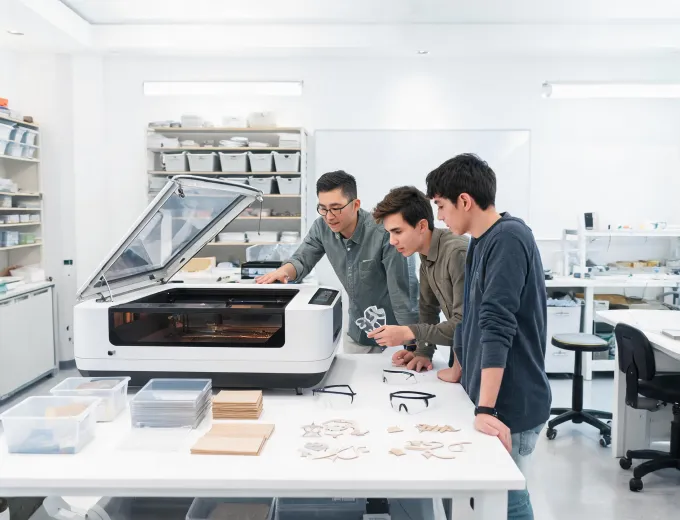
Glowforge users are not all solving the same problem. A middle school lab may need durable lesson plans, while a jewelry studio may need consistent engraving on premium materials. A retail team may care about seasonal displays, and a product designer may need prototype panels before a supplier quote is ready. The common thread is control over the physical artifact. When teams can cut and engrave nearby, they can test scale, fit, texture, and customer reaction with far less delay.
This is why Glowforge talks about making as a workflow rather than a machine purchase. The best results come when the laser is connected to design habits, material care, project documentation, and support that respects nonindustrial users while still aiming for professional work.
Share your use case and the team will help you think through machine class, materials, ventilation, and workflow readiness.